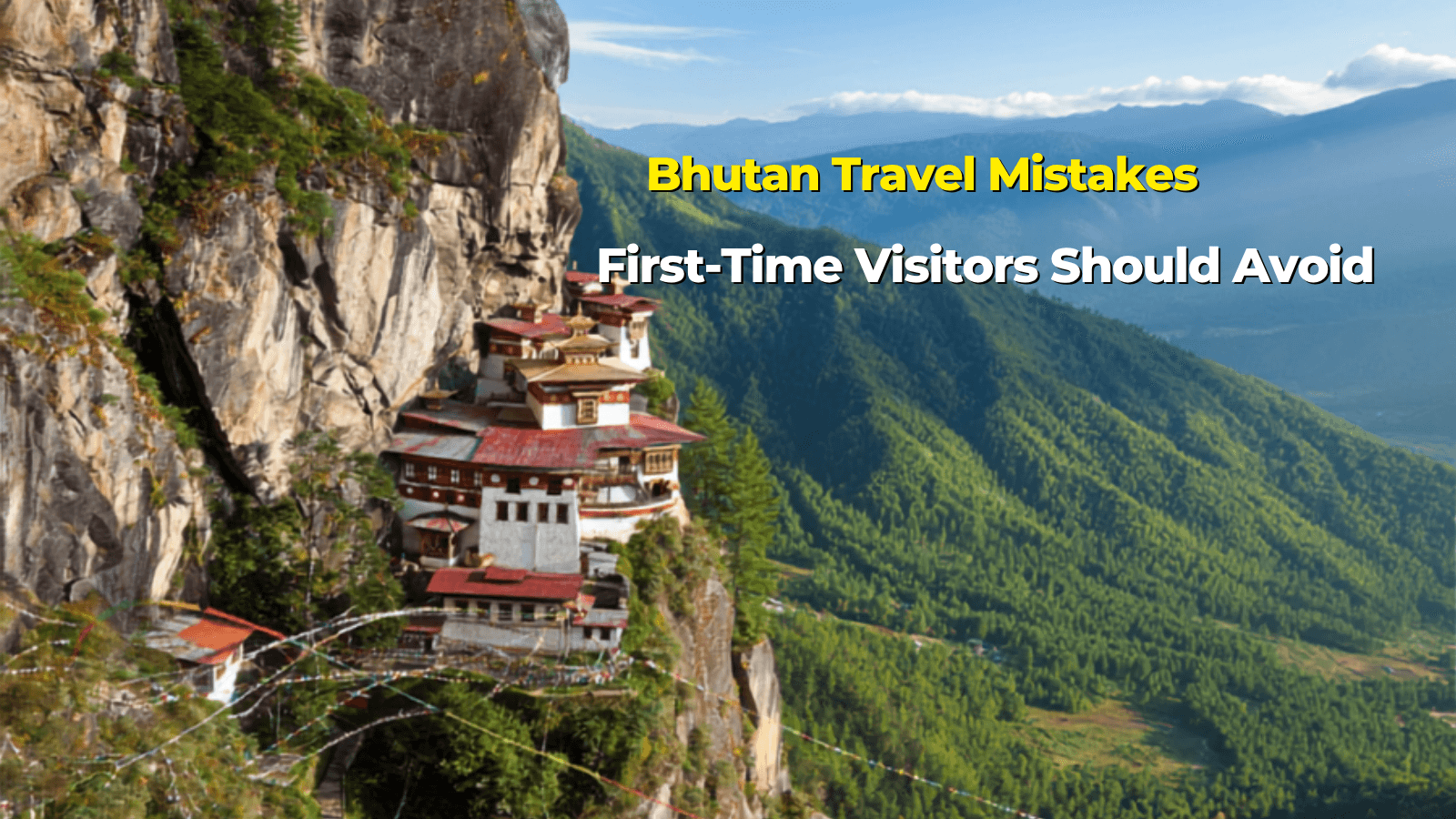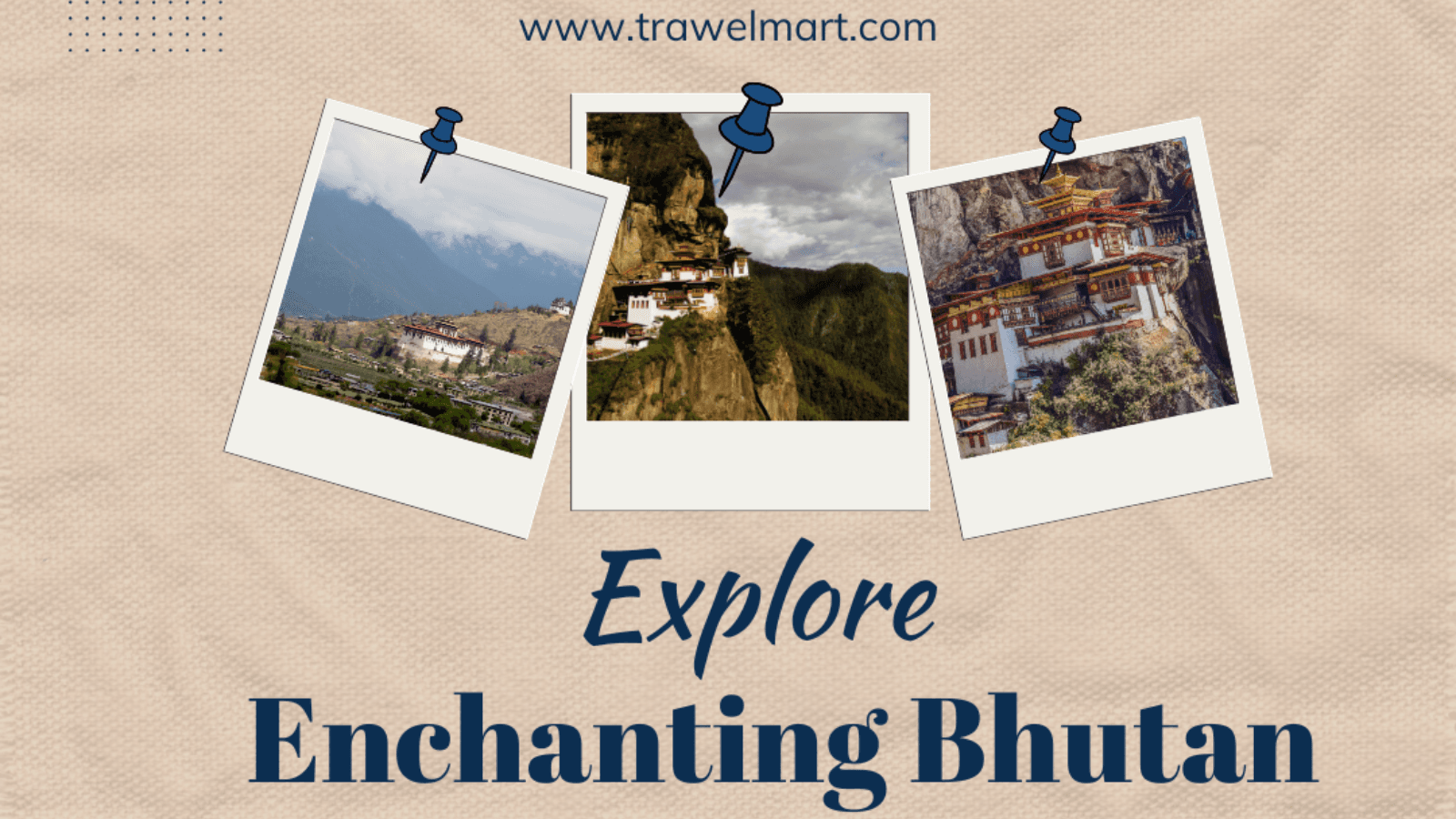

High above the green valleys of Paro, Bhutan, clinging dramatically to the side of a steep Himalayan cliff, stands one of the country's most extraordinary landmarks: Paro Taktsang, better known around the world as Tiger's Nest Monastery.
For many travelers, visiting Tiger's Nest is the defining experience of a Bhutan holiday. The journey combines mountain scenery, spirituality, ancient Buddhist traditions, peaceful forests, and a sense of adventure that begins the moment you set foot on the trail.
The monastery appears almost impossible to reach when viewed from the valley below. Yet thousands of visitors make the journey each year, walking through pine forests, crossing mountain paths, and climbing stone steps to reach the sacred complex.
Tiger's Nest is not simply another sightseeing attraction. It is an important Buddhist pilgrimage site and one of Bhutan's most recognizable symbols. The journey to the monastery encourages visitors to slow down, appreciate the surroundings, and experience a different pace of travel.
For Indian travelers planning a Bhutan spiritual tour, Tiger's Nest can become the emotional highlight of the entire journey.
This complete guide covers everything you need to know before visiting Tiger's Nest, including its history, hiking experience, best time to visit, what to wear, fitness preparation, photography tips, spiritual etiquette, and practical travel advice.
At TrawelMart, we create customized Bhutan tour packages that combine Tiger's Nest, Paro, Thimphu, Punakha, monasteries, Himalayan scenery, and cultural experiences.
"The journey to Tiger's Nest is not simply a hike to a monastery—it is a walk into the spiritual heart of Bhutan."
What Is Tiger's Nest Monastery?
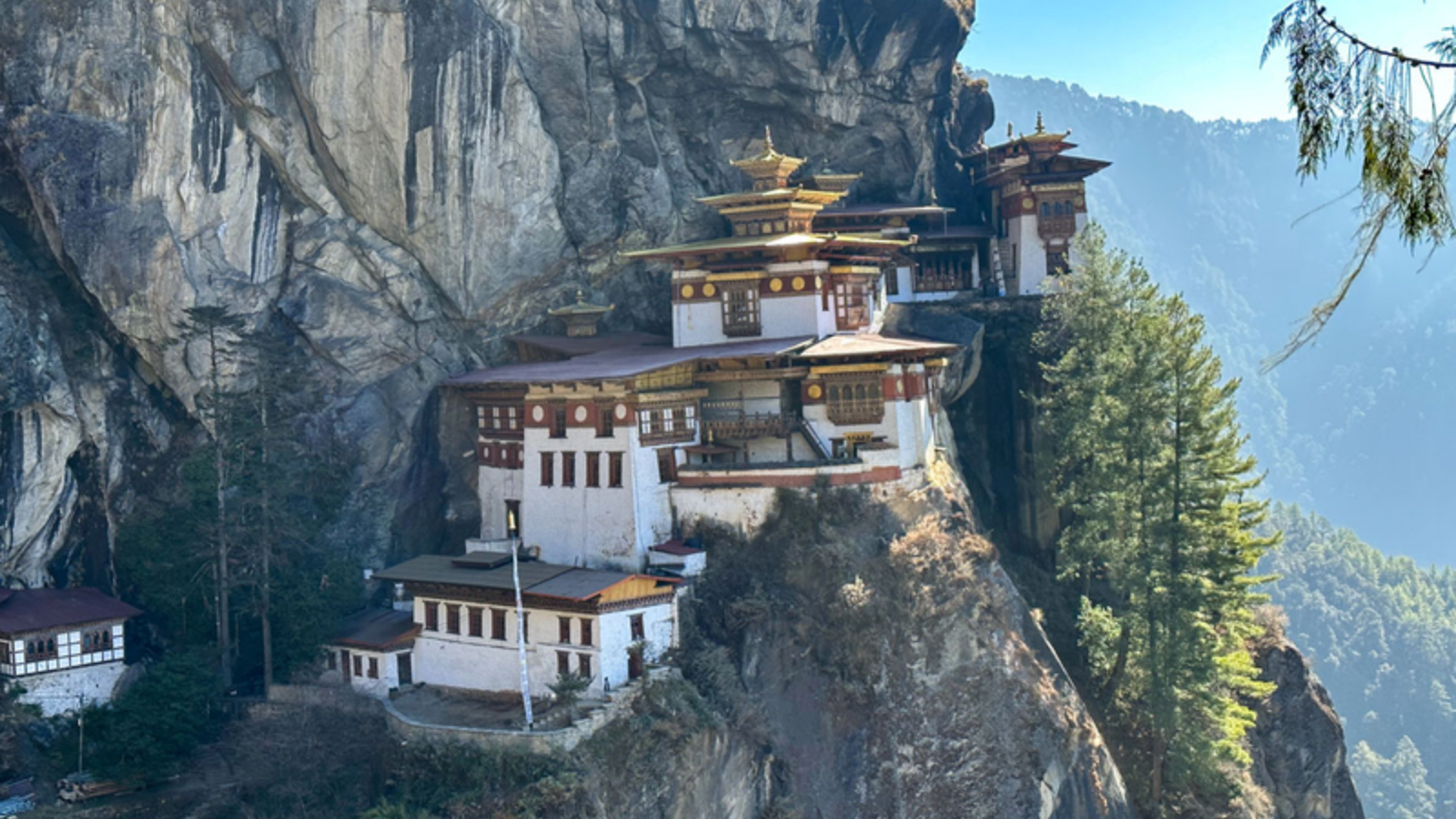
Tiger's Nest, officially known as Paro Taktsang, is a Buddhist monastery located on a cliffside above the Paro Valley.
The monastery complex is associated with Guru Padmasambhava, also known as Guru Rinpoche, who is traditionally believed to have brought Buddhism to Bhutan.
According to Bhutanese tradition, Guru Rinpoche arrived at the location riding on the back of a tigress, giving the monastery its famous name.
The monastery was established in the eighth century, although the structures visitors see today were constructed and restored over different periods.
The complex consists of temples, prayer halls, courtyards, meditation spaces, and traditional Bhutanese architecture surrounded by dramatic Himalayan scenery.
"Tiger's Nest feels extraordinary because its spiritual importance is matched by the almost impossible-looking landscape surrounding it."
Why Visiting Tiger's Nest Is So Special
Many famous landmarks are impressive because of their architecture. Tiger's Nest is different because the entire journey forms part of the experience.
You don't simply arrive at the entrance, take photographs, and leave.
You begin in the Paro Valley and gradually climb through forests. As you gain altitude, the valley becomes smaller beneath you. Prayer flags flutter in the mountain breeze, birds can be heard among the trees, and glimpses of the monastery appear between the cliffs.
Eventually, after reaching a viewpoint, Tiger's Nest emerges dramatically from the mountainside.
The final section involves stairs and a descent toward the monastery before climbing again.
The combination of physical effort, silence, mountain scenery, and spiritual atmosphere makes the experience memorable.
"Tiger's Nest doesn't reveal itself all at once—the mountain slowly gives you glimpses until the monastery finally appears in full."
The Tiger's Nest Hike: What to Expect
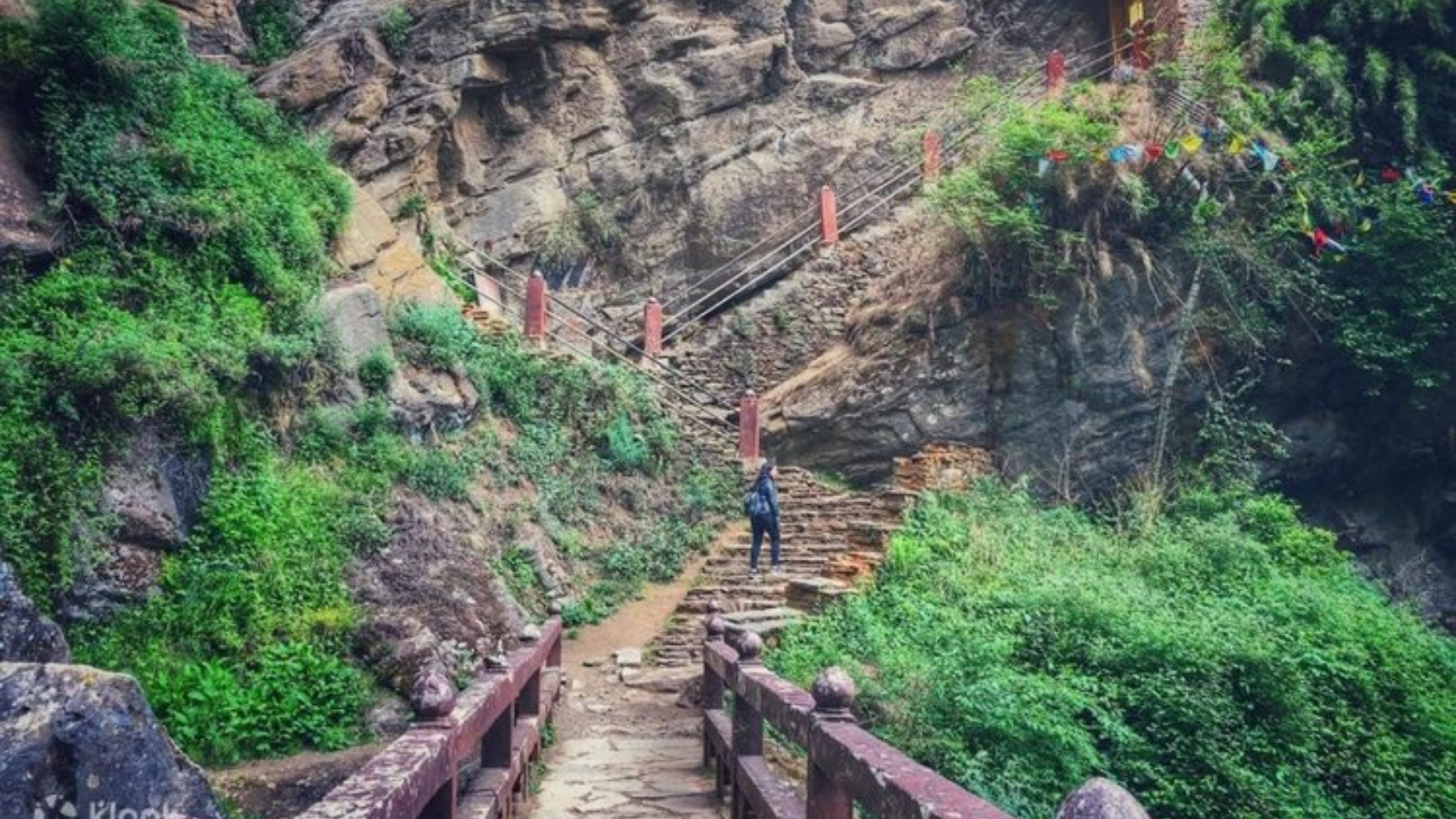
The Tiger's Nest hike is challenging but manageable for many reasonably active travelers.
The trail begins near the valley floor and climbs steadily through pine and rhododendron forests.
The first part is primarily an uphill walk. Depending on your pace and fitness level, reaching the monastery can take several hours.
Many travelers stop frequently to rest, drink water, enjoy the views, and take photographs.
A café along the route provides a natural resting point and is a popular place to pause before continuing toward the monastery.
The final approach includes a significant number of stairs, including sections that descend before rising again toward the monastery complex.
The journey is not a race.
Taking your time is one of the best ways to enjoy the experience.
"At Tiger's Nest, the goal isn't to reach the top quickly—the beauty lies in every step along the way."
How Difficult Is the Tiger's Nest Trek?
The Tiger's Nest trek is often described as moderate to challenging rather than an extreme mountain expedition.
The difficulty depends heavily on your fitness level, walking experience, altitude tolerance, weather conditions, and pace.
Travelers who regularly walk or exercise may find the hike manageable, although the elevation gain can still be tiring.
Those who are not accustomed to long uphill walks should begin preparing several weeks before their Bhutan holiday.
Daily walking, stair climbing, and moderate cardio exercises can help build endurance.
You don't need to be an experienced trekker to visit Tiger's Nest, but you should be prepared for a substantial uphill walk.
"You don't need to be a mountaineer for Tiger's Nest, but you do need patience, comfortable shoes, and a willingness to take the climb slowly."
Best Time to Visit Tiger's Nest
The best time to visit Tiger's Nest generally depends on weather, visibility, and your preference for crowds.
Spring and autumn are popular periods because the weather can be pleasant and mountain views are often beautiful.
Spring brings colorful rhododendrons and fresh greenery to the surrounding landscape.
Autumn can offer crisp air and excellent Himalayan visibility.
Winter can provide clear mountain scenery but temperatures can be cold, particularly early in the morning.
The monsoon period can bring rain and slippery trails, so travelers visiting during wetter months should be prepared for changing conditions.
Weather in the mountains can change quickly, so checking local conditions before beginning the hike is always advisable.
"Choose your season carefully, but remember that Himalayan weather always deserves a little respect."
Start Your Tiger's Nest Hike Early
Starting early is one of the most useful Bhutan travel tips for visiting Tiger's Nest.
An early start allows you to enjoy cooler temperatures and gives you more time to complete the hike without feeling rushed.
Morning light can also create beautiful photography conditions.
The trail becomes busier as the day progresses, especially during popular travel periods.
Beginning early also gives you flexibility to take longer breaks.
Your TrawelMart itinerary can be planned so that the Tiger's Nest hike receives a full day rather than being squeezed between other sightseeing activities.
"An early start turns Tiger's Nest from a rushed attraction into a peaceful mountain experience."
What to Wear for Tiger's Nest
Comfortable clothing is essential.
Wear breathable layers because temperatures can change as you climb.
Good walking or trekking shoes with reliable grip are strongly recommended because parts of the trail can be uneven.
A light jacket is useful because the temperature can be cooler at higher elevations.
If you are visiting during colder months, bring additional warm layers.
Since Tiger's Nest is a sacred religious site, modest clothing is appropriate.
Visitors should avoid wearing clothing that is overly revealing when entering temple areas.
"Dress for the mountain first, but remember that you're also entering one of Bhutan's most sacred spiritual spaces."
What to Carry During the Hike
Keep your daypack relatively light.
Carry drinking water, sunscreen, sunglasses, a hat, tissues, a small snack, and any personal essentials you may need.
A power bank can be useful for travelers taking photographs throughout the day.
A rain jacket is advisable during seasons when weather can change quickly.
Avoid carrying unnecessary heavy items because every extra kilogram becomes noticeable during the climb.
"The lighter your backpack, the more energy you'll have to enjoy the trail."
Take Your Time During the Climb
One of the biggest mistakes first-time visitors make is trying to complete the hike too quickly.
The trail is not a competition.
Take breaks whenever you need them.
Pause at scenic viewpoints and enjoy the Paro Valley.
The gradual pace also gives your body more time to adjust to the elevation.
Your goal should be to complete the journey comfortably rather than reaching the monastery as quickly as possible.
"The Himalayas reward patience. Walk slowly enough to notice what you would otherwise rush past."
The Famous Tiger's Nest Viewpoint
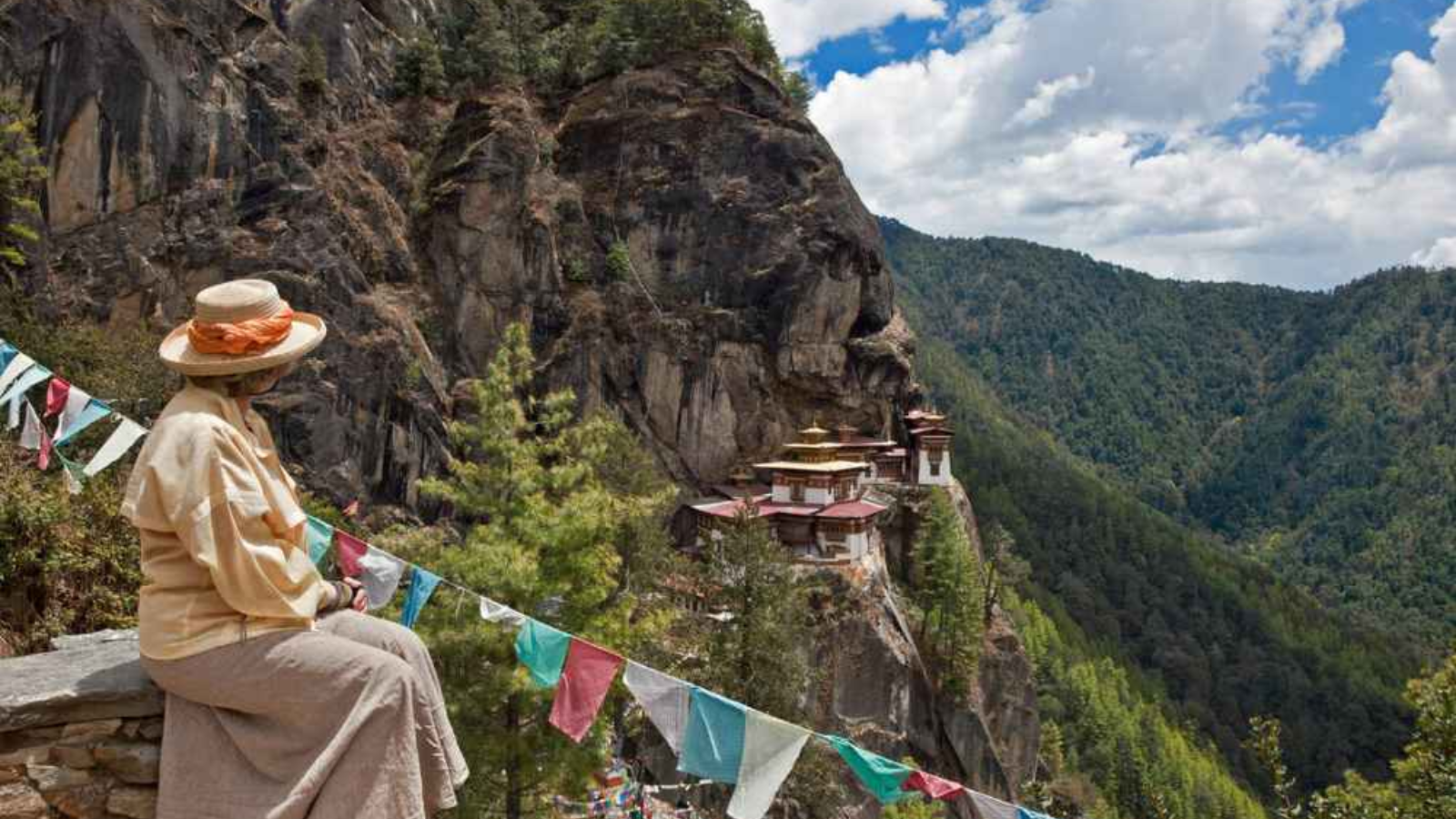
One of the most exciting moments comes when the monastery first becomes clearly visible across the valley.
This viewpoint has become one of the most recognizable photographic perspectives in Bhutan.
The monastery appears to emerge directly from the cliff, surrounded by forest and mountains.
Many travelers stop here for photographs before continuing toward the monastery.
Don't rush through this moment.
Take time to appreciate the landscape beyond the camera screen.
"The first full view of Tiger's Nest is the moment when the entire climb suddenly makes sense."
The Waterfall and Final Stairway
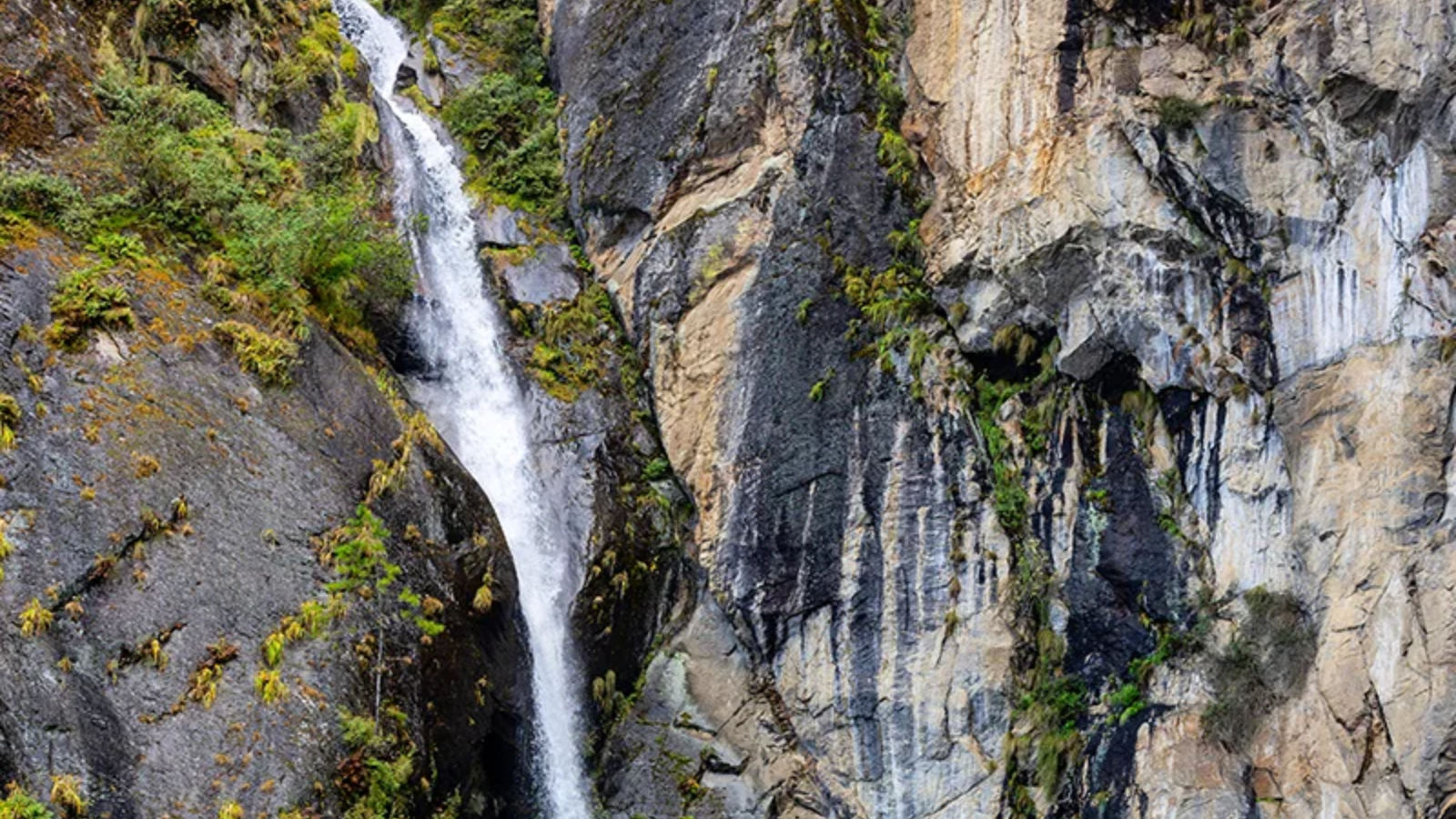
The final part of the route takes visitors across a dramatic section of the mountain.
A waterfall and rocky landscape add to the atmosphere.
You then descend and climb a series of stairs toward the monastery.
This section can feel surprisingly demanding because you have already completed much of the uphill journey.
Take your time and use the available railings where appropriate.
"The final stairs may test your legs, but they also bring you closer to one of Bhutan's most sacred places."
Spiritual Etiquette at Tiger's Nest
Tiger's Nest is an active religious site, not simply a tourist attraction.
Visitors should behave respectfully throughout the complex.
Follow instructions from local guides and monastery staff.
Remove shoes where required before entering specific sacred spaces.
Avoid loud conversations inside temples.
Photography may not be permitted inside certain religious areas, so always follow local rules.
Dress modestly and avoid touching religious objects unless explicitly permitted.
"The most meaningful souvenir from Tiger's Nest is not a photograph—it's the respect you show while standing inside a living place of faith."
Photography Tips for Tiger's Nest
Tiger's Nest is one of Bhutan's most photographed landmarks, but capturing it beautifully requires patience.
The main viewpoint offers the classic composition of the monastery against the cliff.
A wide-angle lens can help capture the scale of the landscape.
A smartphone can also produce excellent photographs, particularly during softer morning light.
Avoid photographing people without permission, especially monks and worshippers.
More importantly, don't let photography distract you from the actual experience.
"Take the photograph, then put the camera away for a moment and simply look."
Can Children Visit Tiger's Nest?
Families can visit Tiger's Nest, but parents should consider their children's age, fitness, and willingness to walk uphill for several hours.
Younger children may find the hike tiring.
Families should carry sufficient water and snacks and plan regular rest stops.
Rather than focusing on reaching the monastery quickly, turn the hike into an adventure by observing birds, forests, prayer flags, mountain scenery, and local culture along the trail.
"For children, Tiger's Nest can become more than a hike—it can be a real-life Himalayan adventure."
Is Tiger's Nest Suitable for Older Travelers?
Older travelers can also experience Tiger's Nest depending on their physical fitness and ability to manage a sustained uphill walk.
The important thing is not to underestimate the trail.
Take frequent breaks and walk at a comfortable pace.
Travelers who are unsure about the physical demands should discuss the journey with their doctor before traveling, particularly if they have conditions that could make strenuous activity or altitude challenging.
"Tiger's Nest rewards determination, but there is no prize for rushing—go at the pace your body allows."
Bhutan Spiritual Tourism Beyond Tiger's Nest
Although Tiger's Nest is Bhutan's most famous monastery, a Bhutan spiritual tour can include many other important religious and cultural sites.
Thimphu offers monasteries, temples, memorial sites, and traditional cultural experiences.
Punakha is home to the magnificent Punakha Dzong, located at the meeting point of two rivers.
Phobjikha Valley offers peaceful landscapes and monasteries surrounded by Himalayan scenery.
Combining these destinations with Tiger's Nest provides a deeper understanding of Bhutan's spiritual traditions.
"Tiger's Nest may be the highlight, but Bhutan's spirituality continues far beyond the famous cliffside monastery."
Paro: More Than a Gateway to Tiger's Nest
Many travelers visit Paro only because it is the starting point for Tiger's Nest.
However, the town and surrounding valley deserve additional time.
Traditional Bhutanese architecture, ancient temples, local markets, farmhouses, and mountain scenery make Paro a beautiful destination in its own right.
Exploring Paro at a relaxed pace before or after your hike can make your trip much more rewarding.
"Give Paro more than a passing glance—the valley has its own quiet magic."
Bhutanese Culture and Hospitality
One of the most memorable aspects of traveling through Bhutan is its cultural identity.
Traditional dress, architecture, Buddhist practices, local festivals, handicrafts, and food remain important parts of everyday life.
Bhutanese hospitality is another highlight.
Visitors often encounter a peaceful, welcoming atmosphere that feels very different from fast-paced urban destinations.
Travelers should approach local customs with curiosity and respect.
"Bhutan's greatest luxury may not be found in a hotel—it is found in the country's peaceful rhythm and genuine hospitality."
Bhutanese Food to Try
A Bhutan trip is incomplete without trying local cuisine.
Ema datshi, a combination of chilies and cheese, is one of Bhutan's best-known dishes.
Other local foods include red rice, momos, phaksha paa, buckwheat dishes, soups, and traditional butter tea.
Bhutanese food can be spicy, so travelers who prefer milder flavors can ask restaurants to adjust the heat.
Indian food is also widely available, making Bhutan comfortable for Indian travelers.
"Bhutanese cuisine is bold, warming, and deeply connected to the country's mountain culture."
Bhutan for Indian Travelers
Bhutan is a particularly attractive destination for Indian travelers because of its proximity and cultural connections.
The country offers a combination of Himalayan scenery, Buddhism, traditional architecture, monasteries, and peaceful landscapes that makes it feel both familiar and distinctly different.
Before traveling, Indian visitors should verify the latest entry requirements, documentation, fees, permits, and travel regulations because policies can change.
A reliable travel company can help organize the necessary arrangements and itinerary.
"For Indian travelers, Bhutan offers a Himalayan escape that feels culturally familiar while opening the door to a completely different landscape."
Best Bhutan Itinerary for a Spiritual Holiday
A well-planned Bhutan itinerary can begin in Paro before continuing to Thimphu and Punakha.
Spend your first day settling into Paro and exploring the valley.
Reserve the next full day for the Tiger's Nest hike.
Continue to Thimphu for temples, monasteries, cultural attractions, and local experiences.
Travel onward to Punakha to explore the spectacular Punakha Dzong and surrounding valley.
Depending on the length of your holiday, you can add Phobjikha Valley or additional cultural experiences.
"The best Bhutan itinerary doesn't simply connect destinations—it connects moments of nature, culture, spirituality, and quiet reflection."
How to Prepare Physically for Tiger's Nest
You don't need professional trekking experience, but basic preparation can make the hike significantly more enjoyable.
Begin walking regularly several weeks before your trip.
Include stairs or uphill walking in your routine.
Build endurance gradually rather than attempting a long hike immediately before traveling.
Comfortable footwear should be broken in before your Bhutan trip.
Most importantly, don't push yourself beyond your limits.
"A little preparation before Bhutan can turn a difficult climb into one of your favorite memories."
Common Mistakes to Avoid
One common mistake is treating Tiger's Nest as a quick half-day sightseeing stop without considering the hiking time.
Another is wearing unsuitable footwear.
Starting too late can also make the hike unnecessarily tiring.
Visitors should avoid carrying heavy backpacks and should not ignore changing weather conditions.
Finally, don't forget that the monastery is a sacred place.
Treat the spiritual environment with respect rather than approaching it solely as a photography destination.
"The biggest Tiger's Nest mistake is rushing through an experience that was meant to be savored slowly."
Why Choose TrawelMart for Your Bhutan Spiritual Tour?
Planning a Bhutan tour package requires more than simply booking a hotel.
Transportation, sightseeing, local guides, permits, accommodation, cultural experiences, and the Tiger's Nest hike all need to fit together comfortably.
At TrawelMart, we design customized Bhutan holidays based on your travel duration, budget, interests, and preferred pace.
Whether you are planning a spiritual retreat, honeymoon, family vacation, cultural journey, or Himalayan adventure, we can build an itinerary around your priorities.
A customized package can include Paro, Tiger's Nest, Thimphu, Punakha, monasteries, scenic viewpoints, comfortable hotels, transfers, guided sightseeing, and cultural experiences.
For travelers planning a Bhutan trip from India, we can also help organize a smooth itinerary from arrival to departure.
"From the first glimpse of the Himalayas to the final steps at Tiger's Nest, TrawelMart helps make your Bhutan journey meaningful, comfortable, and unforgettable."
Conclusion
Visiting Tiger's Nest is more than checking a famous attraction off your travel list.
It is a journey through pine forests, mountain paths, prayer flags, waterfalls, and dramatic Himalayan scenery before arriving at one of Bhutan's most sacred Buddhist sites.
The hike requires effort, but that effort is part of what makes the experience special.
Take your time. Wear comfortable shoes. Start early. Carry enough water. Respect the monastery's religious customs and allow yourself to experience the silence and beauty around you.
Beyond Tiger's Nest, Bhutan offers much more—ancient temples, peaceful valleys, impressive dzongs, traditional villages, Himalayan viewpoints, and a culture that has remained remarkably distinctive.
For Indian travelers searching for a meaningful international holiday, a Bhutan spiritual tour offers an opportunity to step away from everyday routines and experience a slower, more reflective way of traveling.
With a carefully planned Bhutan tour package from TrawelMart, you can explore Tiger's Nest and the wider beauty of Bhutan without the stress of managing every detail yourself.
"Climb the mountain, enter the monastery, breathe in the Himalayan air, and discover that the greatest journey in Bhutan may be the one that happens within."